.png)
Inquiry-Based Learning, Explained Simply (and Why It Matters Before Age Six)


If you have toured a few preschools, you have probably heard the phrase inquiry-based learning. It is one of those terms that sounds lovely and explains very little.
So let us make it concrete.
Start with a true story
A child stands at a water table with a funnel and a few containers. No instructions. The educator does not say, this is how a funnel works. She... carefully observes and provides support or prompts when needed, while allowing the child to take ownership of the discovery. The child pours, spills, frowns, tries again, and then, after a minute or two, something clicks. The water goes where she wanted it to go. She looks up, delighted with herself.
That small moment is inquiry-based learning. The adult designed the opportunity, what we call a provocation, and then held back so the child could do the actual thinking. The discovery belonged to her. That is the whole point. And it is made possible through the careful planning and guidance of the educator.
What it is, in one sentence
Inquiry-based learning follows the child's natural curiosity and lets them build understanding through exploration, questions, and real experiences, rather than simply completing tasks or memorising information.
Parents may ask: “So the children just do whatever they want?
No it is not – their interest is just the starting point, not the end goal.
Children’s interests open the door to learning, but educators carefully plan what happens next.
Inquiry is not a child driving a car wherever they want. It is a child helping to choose the destination while the teacher plans the route and ensures they arrive somewhere meaningful.
Children’s interests open the door to learning, but educators carefully plan what happens next.
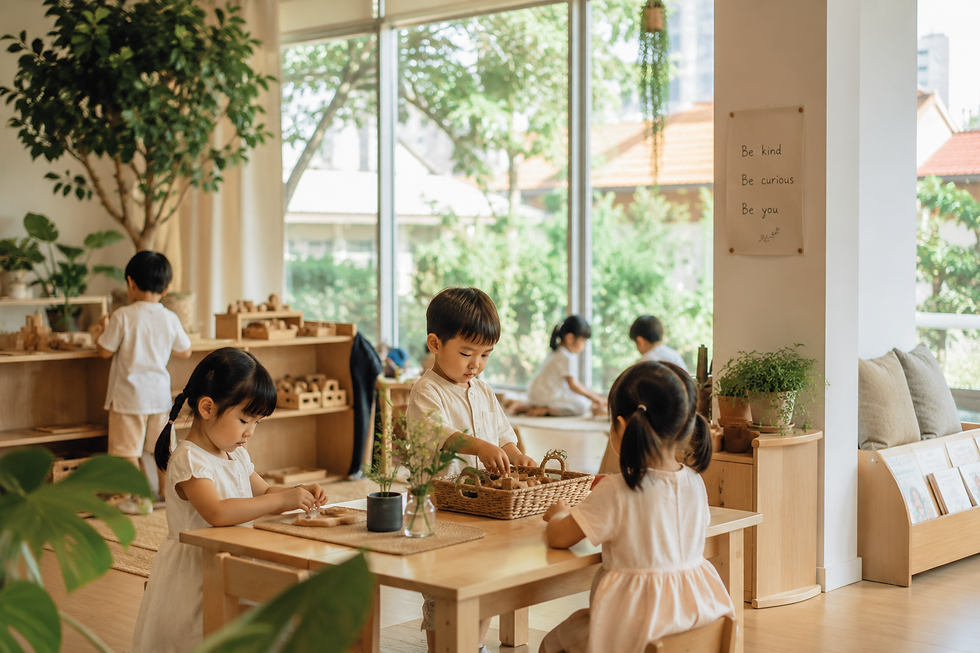
It does not mean a free-for-all. Behind every relaxed-looking morning is a great deal of intentional design, by educators who know exactly what skills they are nurturing and how to nudge without taking over.
How it looks across a day
A group becomes fascinated by snails after rain, so the next week the classroom fills with magnifying glasses, books about shells, and clay for sculpting spirals. A question about why the Easter eggs lost their colours turns into an afternoon of mixing, testing, and arguing happily about which method works best.
Mathematics arrives not just as a worksheet but as a genuine need to count, sort, and measure something that matters to the child.
Literacy and numeracy are not abandoned. They are embedded in meaningful experiences so that children understand their purpose and value, while also developing the persistence needed to master new skills.
Why it(Inquiry-based learning) matters before age six
The early years are when a child decides, somewhere beneath words, whether learning is something done to them or something they get to do. A child who spends these years discovering that their questions lead somewhere develops more than knowledge. They develop persistence, the confidence to try, and a love of figuring things out.
Research suggests that children from quality inquiry-based learning, Reggio, and play-based programmes transition well into formal school, often with stronger executive function, creativity, and curiosity than peers from purely academic preschools The goal is not simply early academic achievement, but the development of confident, capable learners who are motivated to continue learning. It is a child who believes they are capable.
What it asks of the adult
This is the part many people miss. Inquiry-based learning is harder for the educator, not easier. It takes discipline to hold space and let a child struggle productively rather than rushing in with the answer. It takes deep knowledge to turn a passing interest into rich learning. The calm you see in the room is the result of skill, not the absence of structure.
How we practise it at Amber
At Amber, provocations are designed on purpose, every day. Our spaces are calm and sensory-smart so that children have the regulation they need to engage deeply. We also approach it from a cultural angle on top of weaving it into daily life. And our small ratios mean an educator can actually do the patient, attentive work that inquiry requires.
The goal is not a prettier preschool. It is a child who feels safe enough to try, and curious enough to keep learning long after they leave us.
Curious what a provocation looks like in real life? Book a private tour at Amber Katong and watch a morning unfold.

Comments